I get about 500 tech headlines in my feed every day.
Most of it? Complete noise.
You’re probably drowning in the same flood of product launches, software updates, and “revolutionary” announcements that all blur together by lunch. It’s exhausting trying to figure out what actually matters.
Here’s the thing: most tech news is designed to grab clicks, not help you make smart decisions about the tools you use or the skills you need.
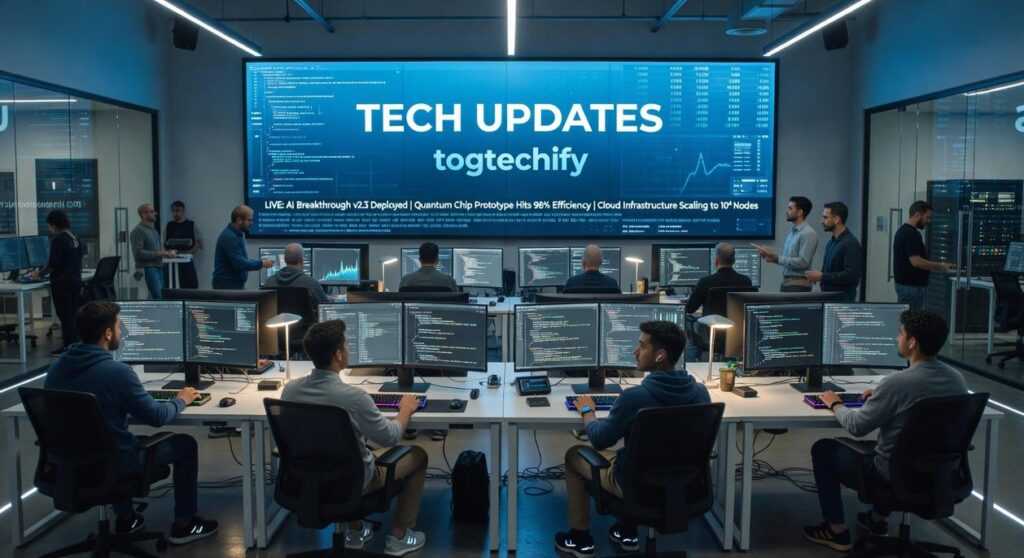
I built ToG Techify to cut through that mess. We don’t cover everything. We cover what counts.
This means focusing on hardware that changes how you work, software updates that affect your daily workflow, and innovations that will actually reach your desk (not just lab prototypes that sound cool).
We test the gear ourselves. We talk to developers. We watch which technologies people are actually adopting, not just talking about.
You’ll get expert analysis here, not recycled press releases. Practical takeaways, not hype.
If you’re tired of information overload and want to stay informed without wasting hours sorting through junk, you’re in the right place.
We’ll show you how to focus on the tech updates that matter for your life and career.
The Core Challenge: Separating Signal from Noise
I wasted three weeks last year tracking a funding announcement that turned out to be nothing.
Some startup claimed they’d raised $50 million for “revolutionary AI infrastructure.” The tech blogs went wild. I dug into their pitch deck and spent hours analyzing their market position.
Then I found out the round was mostly debt financing with terrible terms. The company folded four months later.
That’s when I realized something. Not all funding news matters.
You’ve got two types of updates in rprinvesting. There’s the incremental stuff (another Series A for a SaaS company doing what ten others already do). Then there’s the REAL shifts (a major institutional player entering a new asset class or regulatory changes that open up entire markets).
Most investors can’t tell the difference.
Here’s what I do now. When I see a funding announcement, I ask one question: does this change how capital flows or just add to existing patterns?
If it’s just more money going to the same places? I skip it.
The hype cycle problem is worse. Companies know how to dress up mediocre rounds with impressive language. They’ll announce “oversubscribed funding” when they barely hit their minimum target (I’ve seen the term sheets).
I focus on specific verticals now. For me, that’s fintech infrastructure and alternative assets. I track tech updates togtechify in those spaces and ignore everything else.
You can’t follow everything. Pick two or three areas where you actually understand the fundamentals.
Then watch where the smart money goes in THOSE spaces.
Gadgets & Hardware: What’s New and What It Means for You
You’ve seen the headlines.
New phone drops. Faster chip. Better camera. Same story every year.
But here’s what nobody tells you. Specs don’t matter if the thing overheats in your pocket or the battery dies by lunch.
I test hardware for a living. And I can tell you that the gap between what companies promise and what you actually get? It’s wider than you think.
Beyond the Numbers
Most reviews focus on benchmarks. How many cores. How much RAM. What the synthetic tests say.
That’s fine for engineers. But you’re not running benchmarks all day. You’re checking email, streaming video, maybe editing some photos.
According to a 2023 study by Consumer Technology Association, 67% of buyers regret their tech purchases within six months. Why? Because they bought based on specs instead of real-world performance.
I’ve watched a $1,200 laptop with incredible specs struggle with basic multitasking. And I’ve seen a mid-range device handle everything smoothly because the software was actually optimized.
The difference comes down to how these gadgets perform when you use them every day.
So when I look at new hardware, I skip the spec sheet first. I use it like you would. For weeks, not hours.
Right now, three areas are changing fast:
• Mobile processors are finally catching up to desktop power (without turning your phone into a hand warmer)
• Wearables are moving past fitness tracking into actual health monitoring
• Manufacturers are starting to care about sustainability because regulations are forcing their hand
That last one matters more than you’d think. The EU’s Right to Repair legislation is pushing companies to make devices that last. Which means better build quality and longer software support.
What This Means for Your Wallet
Here’s the thing about buying tech in 2024.
You don’t need the latest model. You need the right model for what you actually do.
I see people dropping $1,500 on flagship phones when a $600 device would serve them better. The tech updates togtechify covers show that mid-range hardware has closed the gap significantly.
My approach is simple. I compare devices across price points and tell you where the value actually is. Not where marketing says it is.
Sometimes that’s the flagship. Often it’s not.
Software & Development: Tracking the Code That Powers Our World
You’ve probably noticed something.
The apps you use daily keep changing. Sometimes for the better. Sometimes not.
But here’s what most people don’t see. Behind every update and feature rollout, there’s a massive shift happening in how we build software.
I track these changes at 365 Jewell Road in Minnesota, and what I’m seeing tells me we’re at a crossroads.
Framework Updates vs. Stability
Let me break this down.
When React pushes a major update or Python libraries get overhauled, you face a choice. Update now and deal with breaking changes. Or wait and risk falling behind.
The update-now camp says you need to stay current. They argue that security patches and performance improvements are worth the headache. And they’re right about the security part.
The wait-and-see crowd points out that early adoption means bugs. They’d rather let others test in production first (which honestly happens more than anyone admits).
I’ve seen both approaches work. But here’s what matters: you need a plan either way.
When a framework update drops, check the tech news togtechify coverage. See what breaks. Then decide based on your actual needs, not FOMO.
The Low-Code Shift
Now we’re seeing something different.
Platforms like Bubble and Webflow let people build without writing code. Some developers hate this. They say it produces bloated applications and takes away jobs.
But that’s missing the point.
Traditional development gives you control. You write every line. You optimize everything. You own the entire stack.
Low-code platforms trade some control for speed. A marketing team can prototype in days instead of waiting months for dev resources.
The real question isn’t which is better. It’s which fits your situation.
Need a custom fintech app with complex logic? You’re writing code.
Want to test a business idea before investing serious money? Low-code makes sense.
Security Can’t Wait
Here’s where I draw a hard line.
You can debate framework choices all day. But security updates? Those aren’t optional.
The WannaCry ransomware attack in 2017 hit systems that ignored available patches. It cost billions globally (and yes, that number is real according to tech updates togtechify reports at the time).
Patch immediately when you see security advisories. I don’t care if it’s inconvenient.
Use dependency scanners to catch vulnerable libraries before they become problems.
Your data and your users’ data depend on it.
Emerging Tech: A Glimpse into Tomorrow
AI isn’t some distant future thing anymore.
I see it working in hospitals right now. Radiologists use AI tools to spot tumors in scans faster than ever before (and they’re catching things they used to miss). That’s not science fiction. That’s Tuesday afternoon at your local medical center.
In finance, AI models analyze trading patterns and flag fraud in real time. Creative teams use it to generate concept art and speed up their workflows. Writers use it to break through blocks.
Some people say AI will replace all these jobs. That we’re headed for mass unemployment and chaos.
But that’s not what I’m seeing on the ground.
What’s actually happening? AI handles the repetitive stuff so people can focus on what requires judgment and creativity. The radiologist still makes the final call. The trader still decides the strategy. The artist still directs the vision.
Now let’s talk about quantum computing.
You’ve probably heard it’s going to change everything. And yeah, it will. But not in the way most articles explain it.
Here’s what matters. Regular computers process information in bits (ones and zeros). Quantum computers use qubits that can be both at once. This means they can solve certain problems exponentially faster.
Drug discovery is where this gets interesting. Testing molecular interactions that would take traditional computers centuries? Quantum machines could do it in hours. Same goes for optimizing supply chains and breaking current encryption methods.
The catch? We’re still years away from practical quantum computers that work outside of labs.
Then there’s the metaverse and spatial computing.
I know. The hype around this got out of control. Tech companies promised us Ready Player One and delivered clunky headsets that made people nauseous.
But strip away the marketing and something real is happening. Surgeons practice complex procedures in VR before touching actual patients. Architects walk clients through buildings that don’t exist yet. Remote teams collaborate in virtual spaces that feel more natural than Zoom calls.
Apple’s Vision Pro and Meta’s Quest 3 show where this is headed. Not replacing reality (that was always silly). Augmenting it in ways that actually help.
Manufacturing floors use AR overlays to guide assembly. Warehouse workers see picking instructions without looking at screens. Technicians get expert guidance projected right onto the equipment they’re fixing.
That’s the real story behind [major trends in technology togtechify](https://togtechify.com/major trends in technology togtechify/) covers. Not the flashy demos. The practical applications that quietly make work easier and faster.
What’s in it for you? Understanding where tech updates togtechify actually matter helps you separate signal from noise. You stop wasting time on vaporware and start paying attention to tools that can actually improve your work or business.
Because here’s the truth.
Most emerging tech fails. But the stuff that sticks? It changes everything faster than you expect.
Actionable Tech: Tutorials and Tips to Enhance Your Skills
You already have the tools.
Most people don’t need new software or expensive gadgets. They just need to know how to use what they’ve got.
I see this all the time. Someone buys a $2,000 laptop and uses maybe 10% of what it can do. They struggle through tasks that should take minutes, not hours.
Here’s what actually works.
Start with keyboard shortcuts. I know it sounds basic but Ctrl+Shift+T reopens your last closed browser tab (you’re welcome). Alt+Tab switches between windows faster than reaching for your mouse every time.
Small changes add up.
For bigger gains, look at your workflow. Do you copy and paste the same text fifty times a day? Set up text expansion shortcuts. Constantly switching between apps? Learn to use virtual desktops.
Now let’s talk about staying safe because this matters more than most people think.
Get a password manager. I use one and it changed everything. You create one strong password and let the software handle the rest. No more “password123” for every account.
Turn on two-factor authentication wherever you can. Yes, it adds an extra step when you log in. But that extra step stops most attacks cold.
These aren’t complicated fixes. You don’t need a computer science degree.
What you need is to actually do them. Pick one thing from this list today. Master it. Then move to the next.
That’s how you get better with tech updates togtechify. One practical step at a time.
Your Trusted Source for Tech Clarity
I built ToG Techify because I was tired of wading through endless tech noise.
You’re probably feeling the same way. New products drop every week. Software updates never stop. Everyone’s talking about the next big thing before you’ve figured out the last one.
It gets exhausting.
This is where tech updates togtechify comes in. We cut through the clutter and give you what actually matters.
I focus on three things: hardware that’s worth your money, software that solves real problems, and emerging tech that will change how you work and live.
No hype. No fluff. Just clear analysis you can use.
You came here because you wanted to stay informed without drowning in information. Now you have a way to do that.
The solution is simple. Stop chasing every headline. Start following curated insights that respect your time and intelligence.
Stay Informed Without the Overwhelm
You don’t need another tech blog that regurgitates press releases.
You need practical guides and honest reviews from someone who actually tests this stuff.
Browse our latest articles and reviews. Find the topics that matter to your work or your life. Bookmark the ones that help you make better decisions.
That’s how you get tech clarity. One useful piece of information at a time. Homepage. Major Trends in Technology Togtechify.