Anime art is everywhere, and it’s easy to see why. It’s vibrant, expressive, and just plain cool. You might be thinking, I want to draw that.
But where do you start? Learning how to create a sketsa lukisan anime simple can feel daunting. Don’t worry, I get it.
This guide is for absolute beginners. No fancy tools or years of practice needed. By the end, you’ll have the skills to sketch a basic anime face.
And the best part? You won’t need any expensive or professional art supplies. Just grab a pencil and some paper.
Let’s dive in.
What Makes a Sketch Look Like Anime?
When you look at an anime sketch, it’s pretty clear what sets it apart from more realistic styles. The key is in the details.
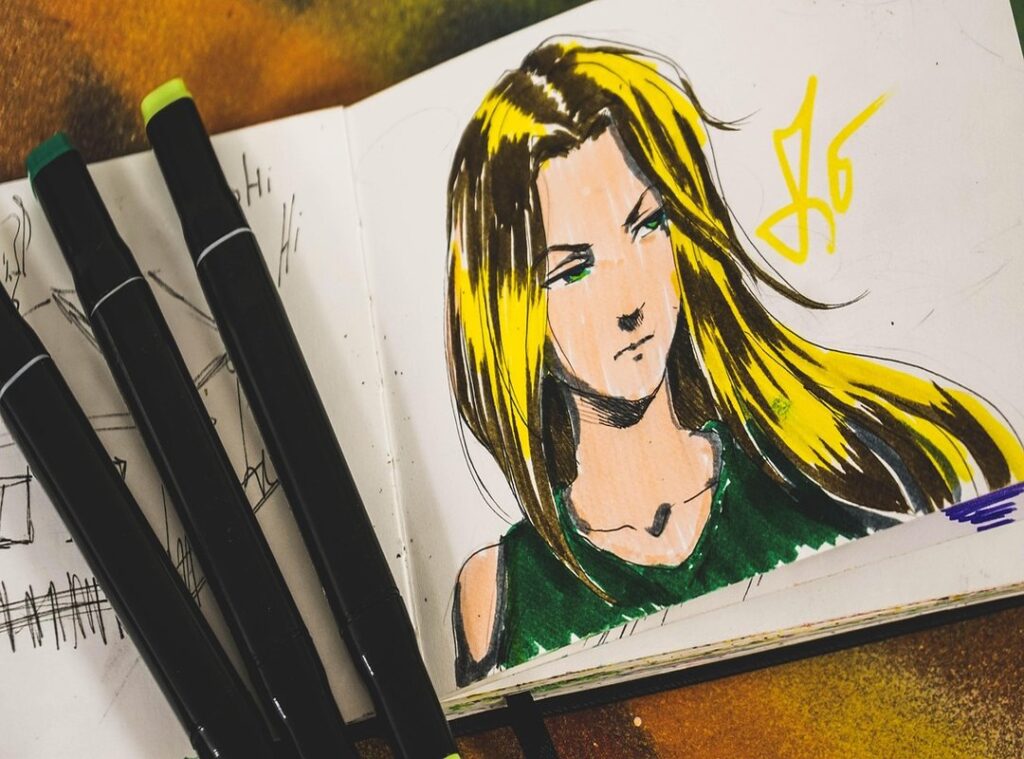
First off, those large, expressive eyes. They’re like windows to the character’s soul, showing every emotion with just a glance.
Next, the nose and mouth. In anime, these features are often super simplified—just a few lines or dots. It’s all about minimalism here.
And let’s not forget the hair. Anime hairstyles are distinct and often sharp or ‘blocky.’ They add a lot of personality and style to the character.
In a nutshell, anime art prioritizes emotion and style over anatomical perfection. It’s all about capturing the feel and energy of the character.
- Large, expressive eyes that convey emotion
- Simplified nose and mouth (often just simple lines or dots)
- Distinct, often sharp or ‘blocky’ hair shapes
Mastering these few elements is the secret to creating a recognizable sketsa lukisan anime simple. Once you get the hang of these, your sketches will start to look like they belong in your favorite anime series.
The Only Three Tools You’ll Need to Begin
Let’s debunk the myth that you need expensive equipment. You only need three essential items to start your drawing journey.
A standard graphite pencil, like an HB or #2, is perfect. It’s ideal for light construction lines that are easy to erase.
Why not a fancy mechanical pencil? Simple: they can be too harsh and don’t offer the same flexibility.
Next, a quality eraser. I recommend a kneaded or vinyl eraser over the standard pink one. They clean up mistakes without damaging the paper.
Cleaner erasing means less frustration, and trust me, it makes a big difference.
Finally, plain paper. A simple sketchbook is great for keeping all your practice drawings in one place. This helps you track your progress and see how far you’ve come.
Why not loose sheets, and they get lost, crumpled, and thrown away. A sketchbook keeps everything organized.
Avoid using pens or markers at first. The ability to erase is crucial for learning.
Pens and markers are unforgiving. You can always add them later once you’re more comfortable.
With these tools, you can start with something as simple as sketsa lukisan anime simple. It’s all about getting those basic shapes and lines right.
Your First Anime Face: A 5-Step Walkthrough
Drawing your first anime face can be a bit daunting. But trust me, it’s simpler than you think. Let’s break it down into an easy-to-follow tutorial.
Step 1: The Foundation. Start by drawing a circle for the cranium. Add a simple jawline shape below it.
This forms the basic structure of the face.
Step 2: The Guidelines. Draw a vertical line down the center and a horizontal line across the middle. These lines will help you map out the facial features.
It’s like giving yourself a roadmap.
Step 3: Placing the Features. Place the large eyes on the horizontal guideline. Add a small nose on the vertical line and a simple mouth below it.
Remember, in anime, the eyes are often the most expressive part of the face.
Step 4: Sketching the Hair, and here’s where things get fun. Instead of drawing individual strands, draw the hair in large ‘clumps’ or shapes.
This is a key anime technique that makes the hair look more dynamic and less cluttered. sketsa lukisan anime
Step 5: Finalizing the Sketch. Add a simple neck and shoulders to complete the figure. Carefully erase the initial guidelines to reveal the clean drawing.
This step can be a bit tricky, so take your time.
I always tell people, practice makes perfect. Don’t be too hard on yourself if your first few attempts don’t turn out exactly as you imagined. Every artist starts somewhere.
Remember, sketsa lukisan anime simple is all about capturing the essence with minimal detail. Keep it clean and straightforward. You’ll be amazed at how much character you can bring to life with just a few lines.
Happy drawing!
Common Beginner Mistakes (And How to Easily Fix Them)

Drawing anime faces can be tricky, especially when you’re just starting out. Here are the top mistakes new artists make and how to fix them.
Mistake 1: ‘Floating Head Syndrome’
I see this a lot. Artists draw a head but forget the neck and shoulders. This makes the character look like it’s floating in space.
Always add a neck and at least the hint of shoulders to ground the character. It gives your drawing a more natural and complete look.
Mistake 2: Misaligned or Uneven Eyes
Uneven eyes can throw off the whole face. Use the horizontal guideline strictly. Lightly sketch both eye shapes before committing to darker lines.
This simple trick will help you keep the eyes aligned and symmetrical.
Mistake 3: Pressing Too Hard
Using too much pressure initially makes construction lines difficult to erase. The fix, and use light, gentle strokes.
This way, you can easily make adjustments without leaving heavy marks on your paper.
Mistake 4: ‘Spaghetti Hair’
Drawing many thin, separate strands can make the hair look messy and unprofessional. Instead, focus on drawing large, defined shapes for bangs and sections of hair. This method gives a cleaner, more polished look.
I predict that as more people get into sketsa lukisan anime simple, these common mistakes will become less frequent. With the right guidance and practice, new artists can avoid these pitfalls and create more polished, professional-looking drawings.
Adding Simple Shading to Make Your Sketch Pop
When I first started sketching, I thought adding depth and dimension was all about intricate details. WRONG. It’s actually as simple as understanding a single light source.
Think about where the light is coming from. This will help you determine where shadows should fall. It’s a game-changer.
Simple shading can add so much to your sketsa lukisan anime simple. You don’t need to go overboard. Just a few well-placed shadows can make your drawing pop.
Pinpoint the three most impactful places to add a little shadow:
- Under the chin on the neck
- Beneath the bangs on the forehead
- A small shadow in the top part of the eye’s iris
These areas are where shadows naturally occur, and they can add a lot of depth to your sketch.
Using the side of the pencil lead for a softer, more blended shading effect works wonders. The sharp point can sometimes make the shading look too harsh and unnatural.
LESS IS MORE. The goal is to add a touch of depth, not to render a realistic portrait. Trust me, a little goes a long way.
So, next time you’re sketching, take a moment to consider the light source. Add those simple shadows. You’ll be amazed at how much it can transform your drawing.
Your Journey into Anime Art Starts Now
Recapping the core lesson: creating a sketsa lukisan anime simple is about understanding a few key shapes and following a simple process. You now have a complete toolkit, from understanding the style to executing your first drawing and avoiding common errors.
The most important next step is practice. Consistent effort, even just 15 minutes a day, is the key to improvement. Challenge yourself to grab your pencil and paper right now and try sketching the face of your favorite anime character using the 5-step method.
Believe in your potential as an artist. With dedication and practice, you can create amazing anime art.
 Sylvia Barkerister has opinions about tech tutorials and tips. Informed ones, backed by real experience — but opinions nonetheless, and they doesn't try to disguise them as neutral observation. They thinks a lot of what gets written about Tech Tutorials and Tips, Latest Technology News, Expert Analysis is either too cautious to be useful or too confident to be credible, and they's work tends to sit deliberately in the space between those two failure modes.
Reading Sylvia's pieces, you get the sense of someone who has thought about this stuff seriously and arrived at actual conclusions — not just collected a range of perspectives and declined to pick one. That can be uncomfortable when they lands on something you disagree with. It's also why the writing is worth engaging with. Sylvia isn't interested in telling people what they want to hear. They is interested in telling them what they actually thinks, with enough reasoning behind it that you can push back if you want to. That kind of intellectual honesty is rarer than it should be.
What Sylvia is best at is the moment when a familiar topic reveals something unexpected — when the conventional wisdom turns out to be slightly off, or when a small shift in framing changes everything. They finds those moments consistently, which is why they's work tends to generate real discussion rather than just passive agreement.
Sylvia Barkerister has opinions about tech tutorials and tips. Informed ones, backed by real experience — but opinions nonetheless, and they doesn't try to disguise them as neutral observation. They thinks a lot of what gets written about Tech Tutorials and Tips, Latest Technology News, Expert Analysis is either too cautious to be useful or too confident to be credible, and they's work tends to sit deliberately in the space between those two failure modes.
Reading Sylvia's pieces, you get the sense of someone who has thought about this stuff seriously and arrived at actual conclusions — not just collected a range of perspectives and declined to pick one. That can be uncomfortable when they lands on something you disagree with. It's also why the writing is worth engaging with. Sylvia isn't interested in telling people what they want to hear. They is interested in telling them what they actually thinks, with enough reasoning behind it that you can push back if you want to. That kind of intellectual honesty is rarer than it should be.
What Sylvia is best at is the moment when a familiar topic reveals something unexpected — when the conventional wisdom turns out to be slightly off, or when a small shift in framing changes everything. They finds those moments consistently, which is why they's work tends to generate real discussion rather than just passive agreement.